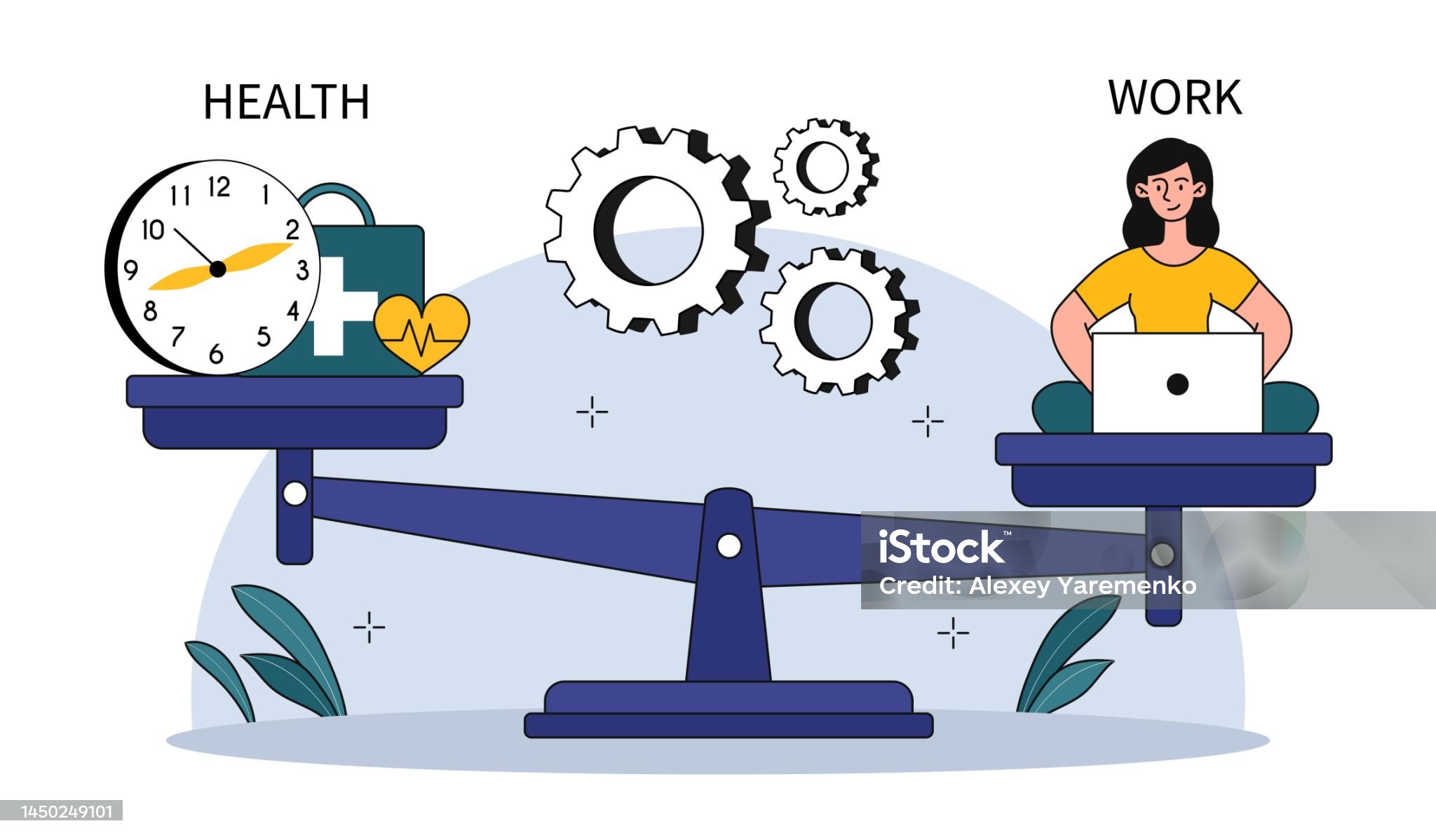
Why Founder Burnout, Decisions & Startup Money Are Deeply Connected
 Baltej Singh9 min read
There's a pattern that plays out across startups of every size, sector, and stage. It doesn't show up in your metrics dashboard. It won't appear in your investor update. But it's there — threading invisibly through every financial decision your company makes.
It goes like this: the founder burns out. The decisions get worse. The money disappears faster. And by the time anyone notices, the damage is structural.
Burnout, decision quality, and capital efficiency aren't three separate problems. They're one problem wearing three masks. And until we start treating them as a single, interconnected system, we'll keep watching promising startups collapse from the inside out.
The Hidden Cost Center Nobody Tracks
Every startup obsessively tracks its burn rate. Runway is the number that keeps founders awake at 3 a.m. But here's what no financial model captures: the burn rate of the founder's brain.
Cognitive capacity is a finite resource. It depletes with every decision, every conflict, every ambiguous situation that demands judgment. And founders face more of these per day than almost any other role in business. Hiring calls at 9 a.m. Product architecture debates at 11. A customer crisis at lunch. Investor relations at 3. A co-founder disagreement at 5. Cash flow projections at 8 p.m.
Each of these draws from the same well. And that well doesn't refill on its own just because you slept six hours and had a cold brew.
When that well runs dry, something shifts. Not dramatically — not at first. But the quality of every downstream decision starts to degrade. And in a startup, where decisions compound faster than interest, that degradation hits the bank account with surprising speed.
How Burnout Rewires Financial Decision-Making
Burnout doesn't just make you tired. It fundamentally changes how your brain processes risk, reward, and trade-offs. Understanding this mechanism is critical, because it explains why burned-out founders don't just make "bad" decisions — they make a very specific type of bad decision.
The shift from strategic to reactive spending. A rested founder allocates capital with intentionality. They weigh options, model scenarios, and make bets they can articulate clearly. A burned-out founder starts writing checks to make problems go away. That expensive agency hire that doesn't match the stage of the company? That premature office lease? That tool subscription bloat? These aren't strategy. They're the financial equivalent of putting out fires with cash instead of thinking.
Discounting the future. Neuroscience research shows that fatigue and chronic stress literally shrink your time horizon. You become biased toward short-term relief over long-term value. In financial terms, this means a burned-out founder will overspend today to avoid a hard conversation, delay a pivot that requires short-term pain, or over-hire to fill a gap that discipline and patience could solve more cheaply.
Loss aversion on steroids. Burnout amplifies the fear of losing what you already have. This manifests as throwing good money after bad — continuing to fund a failing channel, clinging to an underperforming team member because replacing them feels overwhelming, or doubling down on a positioning strategy that isn't working because changing it means admitting a mistake.
The phantom urgency trap. When you're exhausted, everything feels urgent. And urgency is expensive. It leads to rushed vendor contracts without proper negotiation, panic hiring at above-market rates, and premium pricing on services you could have sourced more efficiently with a clear head and an extra week.
The Decision-Money Feedback Loop
Here's where it gets really dangerous: the relationship between decisions and money isn't linear. It's a feedback loop.
Poor decisions burn cash faster. Faster cash burn creates financial pressure. Financial pressure creates stress. Stress accelerates burnout. Deeper burnout produces worse decisions. And the cycle tightens.
Consider a real scenario that plays out constantly. A founder, running on fumes after months of relentless work, decides to hire three senior engineers simultaneously instead of one, because the product roadmap feels impossibly behind. The rationale sounds strategic in the moment. But the reality is that the decision was driven by anxiety, not analysis. The company wasn't ready to onboard three people at once. Productivity actually drops during the ramp-up. The burn rate jumps significantly. Now the runway is shorter, which means the next fundraise needs to happen sooner, which means the founder is now juggling hiring, onboarding, product management, and investor meetings — all while more depleted than before.
Nothing about this scenario involved a "bad" founder or a "bad" company. The product might be excellent. The market might be real. But the decision architecture was compromised by a human system running on empty, and the financial consequences cascaded from there.
Why Traditional Financial Controls Don't Catch This
Most startups rely on a few standard mechanisms to manage financial discipline: board oversight, budget approvals, monthly financial reviews. These are useful — but they're designed to catch what is being spent, not why.
A budget review will flag that marketing spend increased 40% last quarter. It won't flag that the increase happened because the founder, too exhausted to have a difficult performance conversation with the head of marketing, approved an inflated budget request without pushback.
Board meetings will surface that the company missed its revenue target. They rarely surface that the miss is connected to a product decision made during a week when the founder was sleeping four hours a night and running on cortisol.
The gap between financial reporting and human performance is where startups quietly bleed out. The numbers tell you that something is wrong. They almost never tell you that the root cause is a founder whose nervous system has been in fight-or-flight mode for nine months straight.
The Co-Founder and Team Amplification Effect
This dynamic doesn't exist in isolation. It radiates outward.
When a founder is burned out, their decision-making patterns ripple through the organization. Teams pick up on the reactive energy. They start making reactive decisions themselves — not because they're burned out, but because the decision-making culture has shifted. Speed gets rewarded over rigor. Firefighting gets celebrated over prevention. The whole company starts operating in survival mode, and survival mode is the most expensive operating mode there is.
Co-founder relationships, already one of the most fragile elements of any startup, take an outsized hit. Burned-out founders become defensive, rigid, and poor communicators. Disagreements that could be resolved in a 30-minute conversation instead fester for weeks, leading to misaligned spending, duplicated efforts, and strategic incoherence — all of which cost money.
What Changes the Equation
If burnout, decisions, and money are one interconnected system, then the intervention has to be systemic too. Isolated fixes — a meditation app here, a budget spreadsheet there — won't cut it.
Build decision hygiene into your operating rhythm. Not every decision deserves the same energy. Categorize them ruthlessly. What's reversible and low-stakes? Delegate it or time-box it to five minutes. What's irreversible and high-stakes? Protect the conditions under which you make it — schedule it when you're rested, bring in a second perspective, and never make it on the same day you learned about a crisis.
Create a financial circuit breaker. Set a rule with your co-founder, your CFO, or your board: any unplanned expenditure above a defined threshold requires a 48-hour cooling period. This isn't bureaucracy. It's a buffer against the impulsive spending that burnout produces. You'd be surprised how many "urgent" expenses stop feeling urgent after two days of distance.
Audit your decisions retrospectively — with honesty about your state. Once a quarter, review your five biggest financial decisions. For each one, ask: what was my physical and mental state when I made this? Was I rested or running on fumes? Was I responding to data or to anxiety? This isn't self-flagellation. It's pattern recognition. And over time, it gives you a powerful map of your own vulnerability windows.
Treat founder capacity as a line item. Your ability to think clearly isn't free. It has a cost — the cost of whatever it takes to maintain it. Coaching, therapy, protected time off, a lighter meeting schedule during high-stakes decision periods. These aren't perks. They're infrastructure. And they're almost certainly cheaper than the bad decisions they prevent.
Make the implicit explicit with your investors. The best founder-investor relationships are the ones where a founder can say, "I'm running hot right now, and I want to make sure we're not making allocation decisions from that place." Most investors will respect this enormously — it demonstrates the kind of self-awareness and discipline that predicts long-term success.
The Uncomfortable Math
Let's make this concrete. A single bad hiring decision — one made reactively, during a period of burnout — can cost a startup between six and twelve months of that person's salary when you factor in recruiting, onboarding, lost productivity, and eventual severance. For a senior role, that can easily reach several hundred thousand dollars.
One poorly negotiated vendor contract, signed because the founder didn't have the cognitive bandwidth to push back, can cost tens of thousands over its lifetime.
One delayed pivot — avoided because the burned-out founder couldn't face the emotional weight of admitting the current direction isn't working — can cost a company its entire window of opportunity.
Now multiply these across a year of operating while depleted. The number dwarfs the cost of whatever wellness investment might have prevented it.
This isn't fuzzy logic. It's arithmetic. And it's the arithmetic that should change how we think about founder health as a financial variable, not a personal one.
The Reframe
We've built an entire industry around optimizing startup capital efficiency. We have frameworks for lean operations, growth modeling, unit economics, and capital allocation. We've professionalized almost every aspect of how startups manage money.
But we've left out the single biggest variable in the equation: the cognitive and emotional state of the person making the decisions about that money.
Founder burnout isn't a wellness issue that happens to have financial side effects. It's a financial issue that happens to manifest through the founder's body and mind. And until we wire that understanding into how we build, fund, and support startups, we'll keep losing companies not to bad markets or bad products — but to good founders who were simply too depleted to steer.
The money follows the decisions. The decisions follow the mind. Protect the mind, and everything downstream gets better.
It really is that connected.
If you're a founder reading this and recognizing yourself in these patterns, take it as signal, not shame. Awareness is the first intervention — and often the most powerful one. The next step isn't to overhaul your life overnight. It's to make one decision this week from a place of rest instead of reactivity. Start there.
Founder @Nautis | The Founder Systems Architect